

(Smith, 2019)
My development as a Future Leader
Leadership development is defined as the expansion of a person’s capacity to facilitate setting direction, creating alignment and maintaining commitment in groups of people working towards a common goal (Ellen Van Velsor, 2010). Nowadays leaders are being chosen in organizations through recruitment processes but without evaluating their qualities as a leader. Leaders are action oriented, strategists, planners and motivate the organization or their subordinates (Tracy, n.d.). In simpler words leaders give a clear vision towards achieving a common goal in the organization.
The Two-Part Model Theory (Ellen Van Velsor, 2010)
This model gives an idea on how we can develop certain traits of a leader.
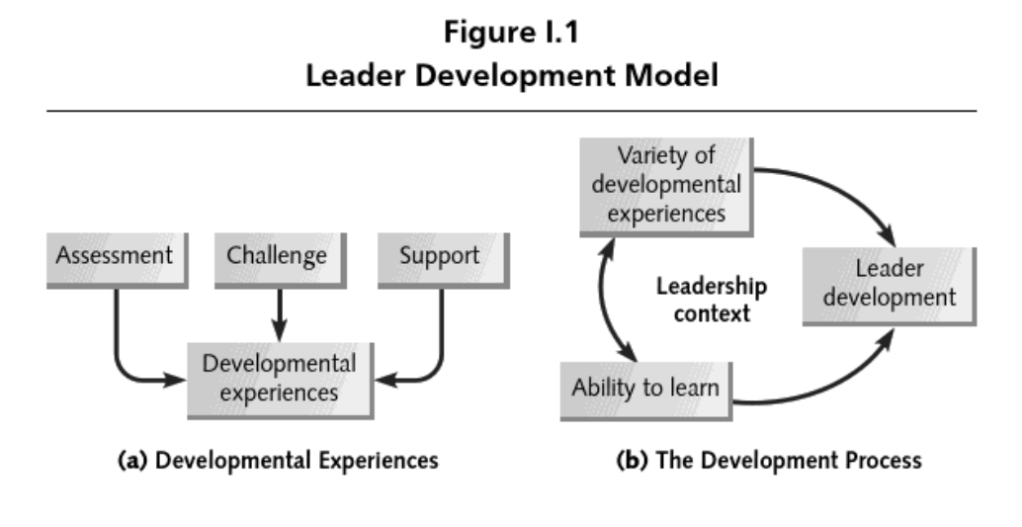
(Ellen Van Velsor, 2010)
- Developmental Experiences: This consists of three elements- Assessment, Challenge, Support (ACS) (Ellen Van Velsor, 2010). Experiences help in the development of a leader and has a major impact. But not all experiences help in the development of a leader. Situations or experiences which provide constructive feedback and support, help in the development than situations which miss out on these elements. These experiences can be a job, internship, training program, a relationship or an assignment. For example, playing in a basketball team with a coach who gives you constructive feedback is more productive than a coach who does not. (Ellen Van Velsor, 2010)
- The Developmental Process: Variation of experiences give the ability to learn the motivational factors, personality factors and learning tactics. The developmental processes can vary because of business strategy, purpose, mission ethics, values, economic conditions and population. All these combined together shapes a leader and helps them inculcate qualities of a leader. (Ellen Van Velsor, 2010)

1)Assessment : Collecting, interpreting the data with variation be it formal or informal is vital. This data can be a feedback from bosses, employees, children, parents, friends and customers or it can also be a feedback to oneself. Formal assessment often includes customer evaluation, performance appraisals, surveys etc. Informal appraisals include a less structured feedback such as observing reactions to others actions or ideas, asking colleagues for advice or feedback. Self-assessment can be formal through psychological inventories and journaling as well as informal by monitoring of internal states and analyzing mistakes and decision-making process. Good assessment data gives clarity on the strengths and weaknesses. Assessment has a varying impact, different people depending on cultural, social and economical differences. (Lynch, n.d.)
2)Challenge: “Growth and Comfort never coexist”- Ginni Rometty (Nusca, 2014)
Challenging experiences force people out of their comfort zones and make them question their skills and approach. This leads them to develop skills and change their views on certain affairs. These challenging situations bring out the best or worst for certain people. Some people crack under pressure, either way the person is going to self-evaluate the mistakes done during the challenging situation and overcome it. So what are the essential elements that develop and motivate a person during these challenges? (Ellen Van Velsor, 2010) Often it’s the clear vision that excites and inspires the person to achieve the goal (Tracy, n.d.).The person needs to discover new ways of completing the task instead of going back to the old ways, they will have to challenge their old behavior. Dealing with failure, disappointment and can also challenge people and push them to reinforce new operational techniques.
3)Support: Adequate support during challenging situations and experiences can take a toll on a person’s behavior. Hence, to bring out the best possible outcome in terms of results as well as development they must include an element of support. Support can differ from person to person. For example, for some people support can be considered as providing resources and freedom for self- initiated goals and for some people providing emotional, positive feedback for their efforts might be considered as support. (Ellen Van Velsor, 2010)
Variety of developmental experiences: Variation provides diversity to the persons experiences and gives them a broader understanding of the task. Broadening the view of leadership is very important in the development of leadership development because it helps the person think in many ways as their sub-ordinates might think and also think of the different outcomes of the challenge. So this leads to development which in turn leads to the ability of learning. (Ellen Van Velsor, 2010)
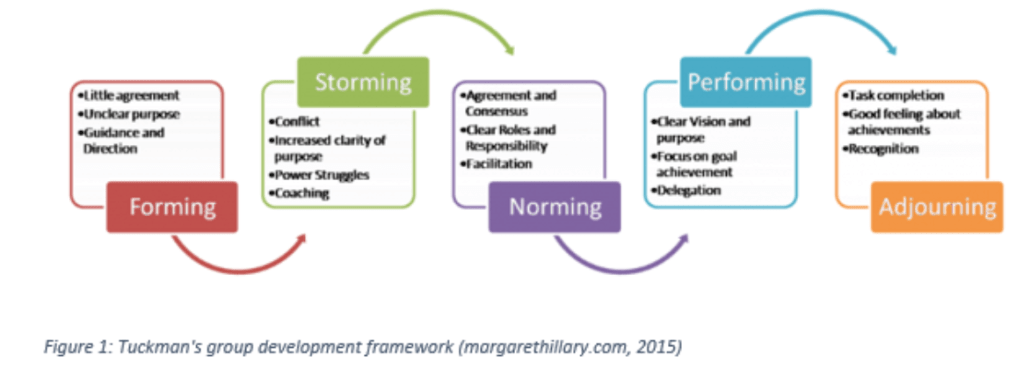
Relevancy : As per the research of (Ellen Van Velsor, 2010) development of a leader varies on many different factors and has been analyzed in the previous topic. This approach has helped me in analyzing my development as a leader and the importance of evaluating, the different outcomes. The two-model theory has incorporated the importance of (ACS) assessment, challenges and support. I think without one of these factors the development is an impossible task because of their interdependency. Leaders also feel significant make their team also feel important, they appreciate everyone’s quality of work and effort in making the organization successful. Also, Tuckman’s group development framework where the forming, storming, norming, performing and adjourning stages was very relatable during my interaction with my batchmates during my MBA. This frame work basically gives you an insight of different stages of engagement with your colleagues or subordinates.
My development as a leader
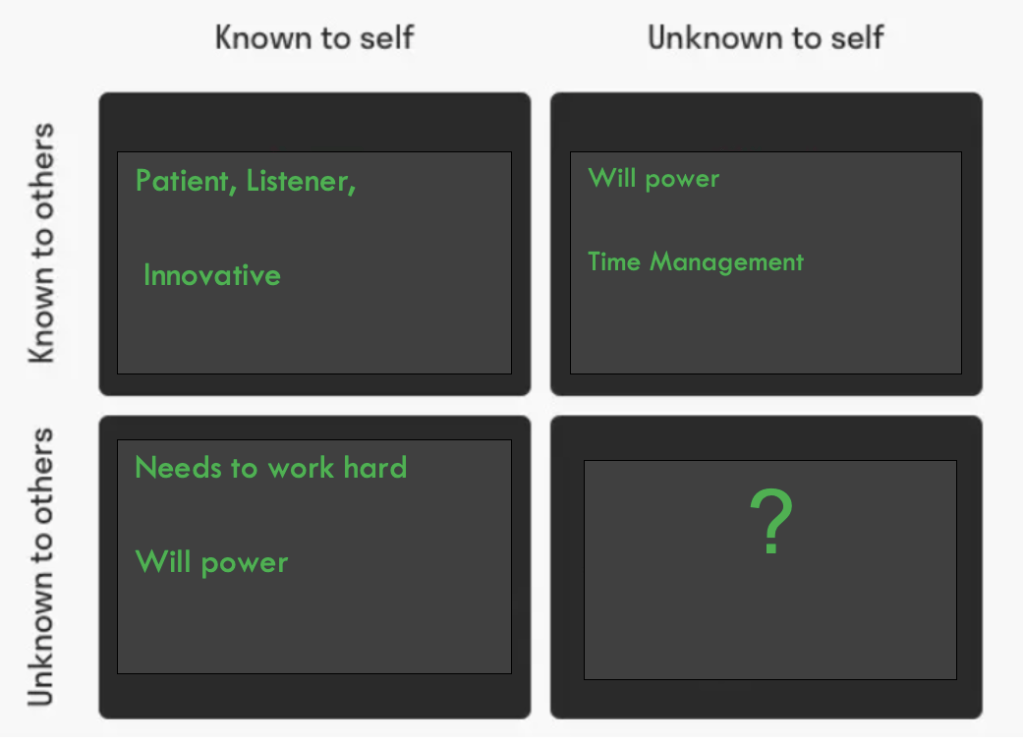
Through the feedback, I have received my leadership style is strategic because I strategise before making a decision as well as taking everyone’s opinion into consideration. My ability to listen and being supportive as a leader is considered my strength. The Johari Window also helped me identify my strengths and weaknesses so that I can work on them. As I mentioned earlier in the Two-Part Model theory (ACS) assessment, change and support are the essentials of leadership development. To conclude I need to work on my leadership qualities and it is always an ongoing process to learn from experience. I aim to these theories in order to grow a leader overall, also to communicate and build a strong bond with my team members.
Conclusion:
Being able to lead was not a skill that I had in me before my (MBA) Masters Of Business Administration. The module Leading in a changing world has taught me to lead with ‘ethics’ which is a huge part of leadership in the society because of the corruption that is present in the society nowadays. Who is a good leader? Well, each individual has their own perspective. But there are many other skills that I need to improvise on in order to be a better leader and I will continue to do so through out my career.
References :
Tracy,B.(2019).[online]Availableat: https://ebookcentral.proquest.com/lib/coventry/reader.action?docID=1390902 [Accessed 9 Dec. 2019].
Lynch, M. (2019). [online] ebookcentral.proquest.com. Available at: https://ebookcentral.proquest.com/lib/coventry/reader.action?docID=958337 [Accessed 9 Dec. 2019].
Nusca, A. (2019). IBM’s Rometty: ‘Growth and comfort don’t coexist’. [online] Fortune. Available at: https://fortune.com/2014/10/07/ibms-rometty-growth-and-comfort-dont-coexist/ [Accessed 9 Dec. 2019].
https://fortune.com/2014/10/07/ibms-rometty-growth-and-comfort-dont-coexist/Velsor, E., D. McCauley, C. and N. Ruderman, M. (2019).
https://ebookcentral.proquest.com/. Available at: https://ebookcentral.proquest.com/lib/coventry/reader.action?docID=484823 [Accessed 9 Dec. 2019].
https://ebookcentral.proquest.com/lib/coventry/reader.action?docID=484823 Mulder, P. (2019). What is the Johari Window Model? Theory, example & template | toolshero. [online] toolshero. Available at: https://www.toolshero.com/communication-skills/johari-window-model/ [Accessed 9 Dec. 2019].


 Business Insights